
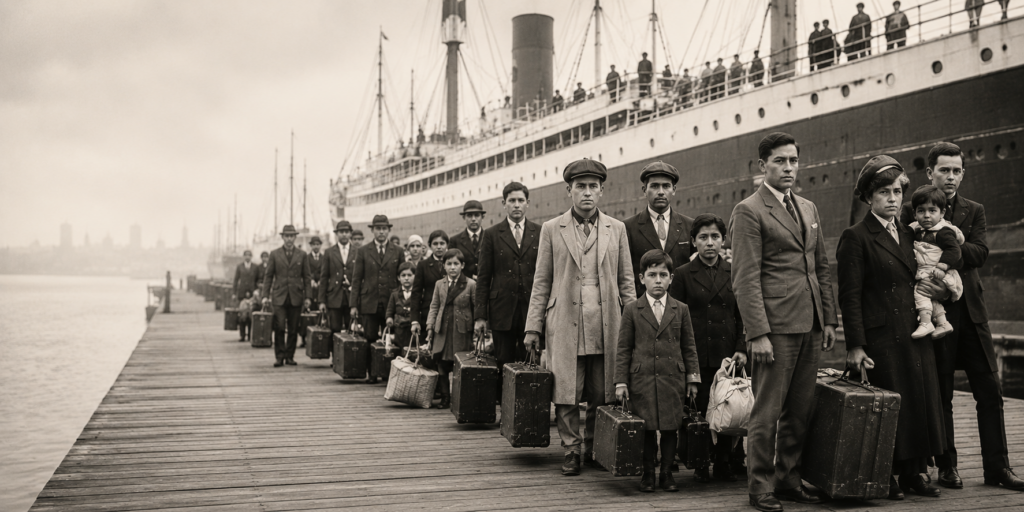
ABOUT THE IMMIGRATION ACT, 1976
A Turning Point in Canadian History
The Immigration Act, 1976 stands as one of the most significant milestones in modern Canadian history. More than a piece of legislation, it represented a new vision for Canada—one that recognized immigration as an essential part of the nation’s social, cultural, economic, and humanitarian development.
As Canadians mark the 50th anniversary of the Act in 2026, we are invited to reflect not only on the law itself, but also on the millions of personal journeys that it helped make possible. Behind every immigration policy are individuals and families seeking opportunity, safety, reunion, and a sense of belonging. The Immigration Act, 1976 helped shape the Canada we know today by establishing principles that continue to guide immigration policy nearly half a century later.
The story of this legislation is ultimately a story about people. It is about parents and grandparents who crossed oceans to build new lives. It is about refugees who found safety after fleeing conflict and persecution. It is about families reunited after years of separation. It is about communities enriched by diverse traditions, languages, and experiences. It is about the ongoing story of Canada itself.
THE LEGACY OF THE IMMIGRATION ACT, 1976
The Immigration Act, 1976 transformed Canada’s immigration system and helped establish principles that continue to guide the country today.

Family Reunification
Keeping families together became a central goal of immigration policy.

Refugee Protection
Refugees were formally recognized and protected under Canadian law.

Fair Selection
Immigrants were increasingly evaluated based on merit rather than nationality.

Economic Development
Immigration became an important part of Canada’s long-term growth.

Diversity & Inclusion
The Act helped support Canada’s multicultural identity and a more inclusive society.

CANADA BEFORE 1976
To understand why the Immigration Act, 1976 was so important, it is necessary to understand the immigration system that existed before it.
For much of Canada’s history, immigration policies were designed primarily to support settlement, economic growth, and nation-building. While immigration contributed significantly to Canada’s development, policies often reflected the social and political attitudes of their time. Certain groups were favored, while others faced restrictions based on nationality, ethnicity, or geographic origin.
During the post-war decades, Canadian society began to change rapidly. Economic growth, urbanization, and growing awareness of human rights encouraged Canadians to rethink many aspects of public policy. Immigration was no exception.
A major reform occurred in 1967 when Canada introduced the Points System, one of the first systems in the world to evaluate immigrants based on education, skills, work experience, and language ability rather than race or nationality. This was an important step toward a more equitable immigration system.
At the same time, Canada was becoming increasingly diverse. New immigrants arrived from Asia, the Caribbean, Africa, Latin America, and the Middle East. Communities across the country were changing, and Canadians were beginning to embrace multiculturalism as an important national value.
By the 1970s, it became clear that Canada needed a modern immigration law that reflected these evolving realities and values.

A NEW VISION FOR CANADA
The Immigration Act, 1976 was passed by Parliament in 1976 and came into force in 1978.
It was the first Canadian immigration legislation to clearly define the objectives of immigration policy and establish a comprehensive framework for managing immigration.
Rather than focusing solely on who could enter Canada, the Act outlined why immigration was important to the country. It recognized that immigration should support Canada’s economic development, cultural vitality, humanitarian commitments, and long-term growth.
For the first time, immigration policy was guided by clearly articulated principles, including:
🟡 Family reunification
🟡 Refugee protection
🟡 Economic growth
🟡 Cultural enrichment
🟡 Humanitarian commitments
🟡 Cooperation between governments.
This represented a profound shift in Canadian thinking. Immigration was no longer viewed simply as a means of filling labor shortages or increasing population. Instead, it was recognized as a permanent and essential component of Canada’s future.

BRING FAMILIES TOGETHER
One of the most important features of the Immigration Act, 1976 was its commitment to family reunification.
The Act formally established the Family Class category, allowing Canadian citizens and permanent residents to sponsor close family members.
For many immigrant families, migration often meant years of separation. Parents, spouses, children, and grandparents were frequently divided by distance and immigration barriers.
The Act recognized that strong families contribute to successful settlement, community stability, and long-term well-being.
Today, family reunification remains one of the most enduring pillars of Canada’s immigration system.

CANADA’S HUMANITARIAN COMMITMENT
The Immigration Act, 1976 transformed Canada’s approach to refugee protection.
For the first time, refugees were formally recognized as a distinct category within Canadian immigration legislation.
The Act established legal pathways for individuals fleeing persecution, conflict, and violence to seek protection in Canada.
Its impact became especially visible during the late 1970s and early 1980s when Canada welcomed thousands of refugees from Southeast Asia.
The humanitarian principles established through the Act continue to influence Canadian refugee policy today.

BUILDING A DIVERSE CANADA
The Immigration Act, 1976 emerged during a period when Canada was embracing multiculturalism as a defining national value.
As immigration patterns expanded beyond traditional source countries, communities from Asia, Africa, Latin America, the Caribbean, Europe, and the Middle East became integral parts of Canadian society. Today, cultural festivals, community organizations, places of worship, heritage institutions, and multicultural events reflect the diversity that immigration has helped create.
The Act played an important role in supporting this transformation.
A TIMELINE OF CHANGE

Points System introduced, evaluating immigrants based on skills, education, and experience.
Multiculturalism Policy adopted as official government policy.
Parliament passes the Immigration Act, 1976.
The Immigration Act, 1976 comes into force.
Canada welcomes thousands of refugees from Southeast Asia.
The Immigration and Refugee Protection Act replaces the Act, maintaining many of its core principles.




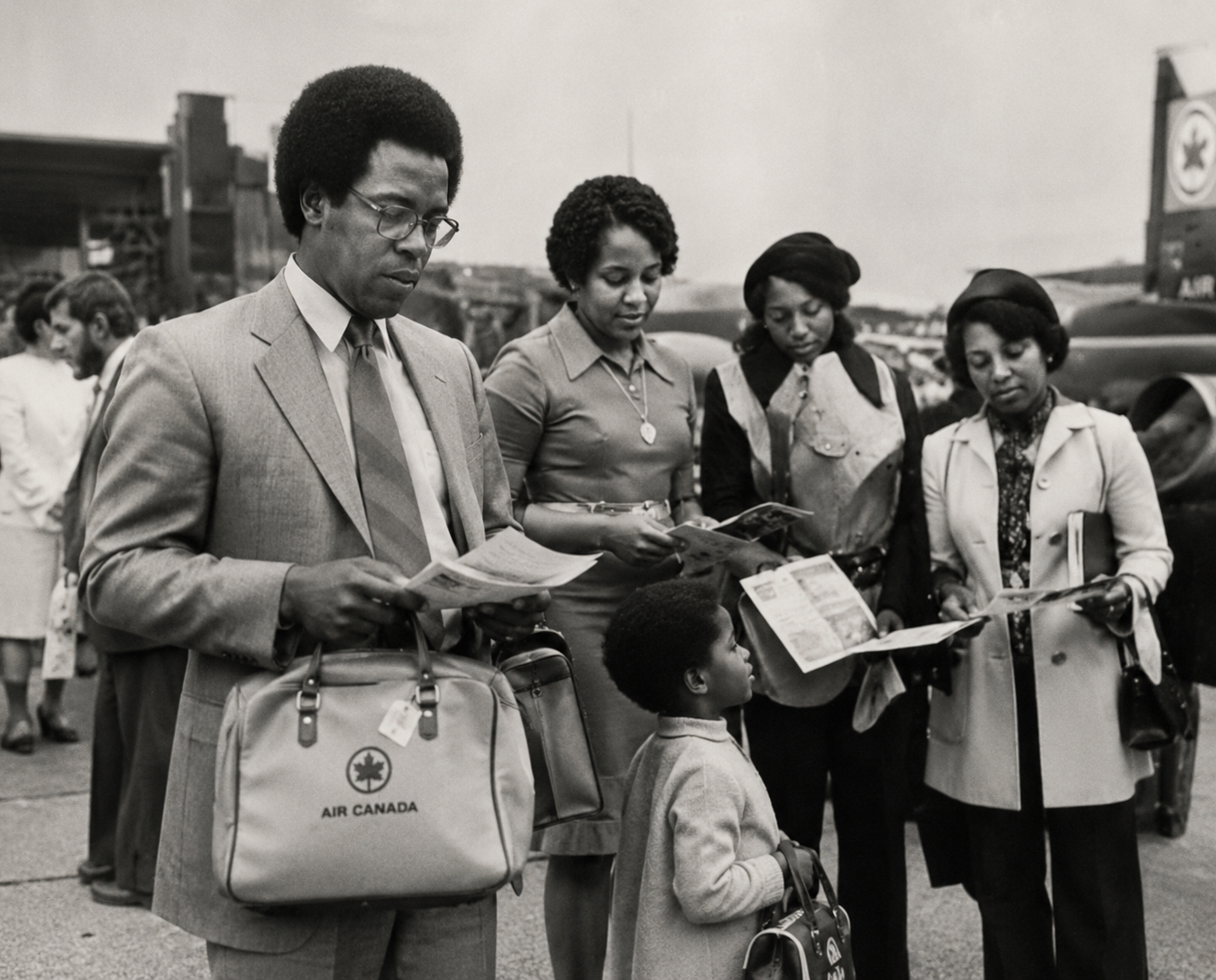

HOW THE ACT CHANGED LIVES

Families Reunited
Parents, spouses, children, and grandparents could reunite and build futures together.

New Communities
Neighborhoods across Canada became richer in culture, language, traditions, and perspectives.

Economic Contributions
Immigrants helped build businesses, create jobs, drive innovation, and strengthen Canada’s economy.
CANADA’S CHANGING POPULATION
The Immigration Act, 1976 helped support this transformation by creating a more structured and inclusive framework for immigration. Its emphasis on family reunification, refugee protection, fairness, and long-term planning reflected Canada’s evolving identity as a multicultural society.
Over the following decades, immigration continued to shape Canada’s population and strengthen communities from coast to coast to coast. Newcomers brought languages, traditions, knowledge, skills, and perspectives that enriched every aspect of Canadian life. Their contributions can be seen in our schools, businesses, cultural institutions, neighborhoods, and public celebrations.
VOICES OF IMMIGRATION
“Canada became home, but we never forgot the journey.”
“The Immigration Act helped reunite our family after years apart.”
“Our story is one of many that helped shape modern Canada.”
Today, Canada’s diversity is recognized as one of its defining characteristics. The country’s multicultural identity is reflected in the many cultures, languages, and traditions that coexist and contribute to a shared sense of belonging.

WHY WE COMMEMORATE THE ACT TODAY
The 50th anniversary of the Immigration Act, 1976 is not simply the anniversary of legislation. It is an opportunity to recognize the people whose lives were transformed by it and whose contributions continue to shape Canada today.
It is a chance to preserve stories, honor experiences, and encourage future generations to understand the role immigration has played in building Canada.
As we mark this milestone, we celebrate the journeys, resilience, achievements, and aspirations of immigrants and refugees whose stories form part of our shared heritage.
YOUR STORY. OUR SHARED FUTURE.
Every journey matters.
Every voice matters.
Every story contributes to Canada’s ongoing history.
Help us commemorate the 50th anniversary of the Immigration Act, 1976 by sharing your story.

This project is funded by the Government of Canada.
Ce projet est financé par le gouvernement du Canada.

TAAM is a charitable organization dedicated to preserving, promoting, and sharing Asian art, culture, and heritage in Canada.
Charitable Registration:
84610 1160 RR0001